
Why Cost Effective Filter Replacement Matters for Your Home's Water Quality

Cost effective filter replacement means choosing filters that deliver real performance without overspending, and for most homeowners, that comes down to three things: the right filter type, the right replacement schedule, and buying smart.
Quick answer: most cost-effective water filter replacement options:
| Filter Type | Typical Cost | Replacement Frequency | Best For |
|---|---|---|---|
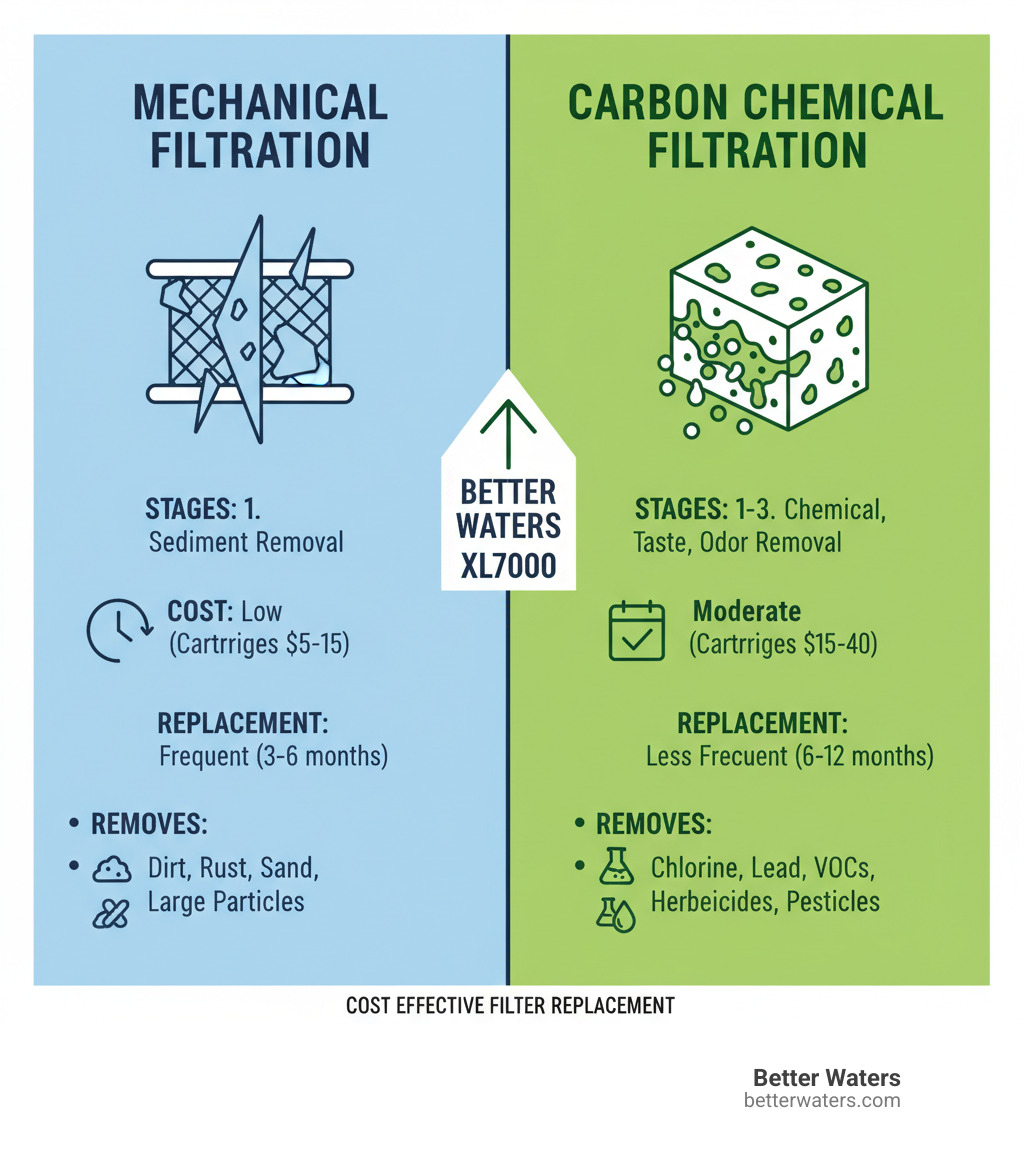
| Sediment cartridge | $5–$15 | Every 3–6 months | Rust, dirt, particles |
| Carbon block cartridge | $15–$40 | Every 6–12 months | Chlorine, lead, VOCs |
| Multi-stage system (e.g., XL7000) | Higher upfront, lower per-gallon cost | Based on capacity (e.g. 6000 gal) | Comprehensive home filtration |
| Universal/generic cartridges | $10–$30 | Varies | Budget-conscious buyers |
Here's the uncomfortable truth most people don't think about: a filter that seems cheap but needs replacing every 6 weeks ends up costing more than a pricier one that lasts 12 months.
The math matters. And so does what the filter actually removes.
For health-conscious homeowners worried about lead, chlorine, and other contaminants in tap water, filter replacement isn't just a maintenance chore, it's the difference between a system that protects your family and one that just looks like it does.
Carbon filtration is at the core of most high-performing water systems today. It's the technology that tackles the contaminants you can't see or taste until they've already done damage. Modern multi-stage systems, like the Better Waters XL7000, are built around this principle, combining carbon filtration with additional stages to cover a wider range of contaminants at a lower cost per gallon over time.
Below, we break down the best options, what they actually cost to run, and how to stop overpaying for replacement filters.
Maximizing Value with Home Water Filtration Systems
When we talk about cost effective filter replacement, we have to look at the "Total Cost of Ownership." In air filtration, experts at Camfil use a Quick Cost Calculator for Air Filter Replacement to show that labor and waste disposal often outweigh the price of the filter itself. The same logic applies to your water. If you are constantly under your sink changing a "cheap" $10 filter every month, you aren't saving money, you're spending your Saturday mornings on plumbing chores.
To find the best value, we need to understand the tools in our arsenal:
- Sediment Filters: Usually made of spun polypropylene, these act like a net to catch "big" stuff like sand, silt, and rust. They are the cheapest to replace (often under $10-$20 at big-box stores), but they don't improve taste or remove chemicals.
- Carbon Block Filters: These are the heavy lifters. They use "adsorption" to pull chemicals like chlorine, THMs and VOCs out of the water. High-quality carbon blocks are essential for New York City apartments where the water travels through miles of aged municipal pipes.
- Granular Activated Carbon (GAC): These contain loose carbon "sand." They are great for flow but can sometimes allow "channeling" where water bypasses the filtration media.
The Power of Bulk and Proprietary Tech
One of the easiest ways to achieve cost effective filter replacement is through bulk purchasing. For example, standard GE whole-house filters often come with a 10% discount if you buy 8 or more. While generic filters exist, they often lack the specialized certifications that ensure they actually work.
Proprietary, high-performance cartridges, like those we use in our systems, are designed to last significantly longer. By opting for a high-capacity cartridge, you reduce the number of times you have to pay for shipping or drive to the store. You can see the dramatic difference in long-term math by checking out this Quick Cost Calculator for Water Filter Replacement, which compares the pennies-per-gallon cost of filtration against the massive expense of plastic bottles.
Choosing the Right Filtration for Cost-Effective Water Quality
Not all filters are created equal. If you buy a filter that isn't rated for the specific contaminants in your local Manhattan or Brooklyn water, you're essentially throwing money down the drain. Here is what we look for to ensure value:
- Micron Rating: This tells you how small a particle the filter can catch. A 5-micron filter is standard, but for high-quality drinking water, a sub-micron rating is often preferred to catch finer contaminants.
- NSF Certifications: This is non-negotiable. NSF/ANSI 42 covers aesthetic effects (taste and odor), while NSF/ANSI 53 covers health-related contaminants like lead. If a filter isn't certified, its performance claims are unverifiable and therefore just marketing.
- Flow Rate and Pressure Drop: A cheap filter that reduces your water pressure to a drizzle is not "cost-effective", it's annoying. We look for systems that maintain a high flow (like 2.5 GPM) so you aren't waiting five minutes to fill a pasta pot.
- Compatibility: While "universal" filters like the GE FXWTC are popular for basic sediment needs, they often lack the multi-stage punch required for professional-grade purification.
The XL7000: A Masterclass in Multi-Stage Filtration for Optimal Value

If you're looking for the ultimate example of cost effective filter replacement, look no further than the Better Waters XL7000. We designed this system specifically to solve the "replacement fatigue" that plagues most homeowners.
Most pitcher filters or basic under-sink units need a new cartridge every 40 to 100 gallons. The XL7000 features a massive 6000-gallon capacity. For the average NYC household, that means you only have to think about your filter on average once a year.
Carbon Filtration Core: The Heart of the System
At the center of the XL7000 is advanced carbon filtration technology developed by 3M. Carbon is the "gold standard" for a reason. It doesn't just block particles; it chemically bonds with contaminants. This is how we effectively remove:
- Chlorine and Chloramines: The chemicals used by the city to disinfect water, which can leave a "swimming pool" taste and smell.
- Lead: A major concern in older New York City buildings with aging plumbing.
- THMs, VOCs and Cysts: Microscopic threats that standard sediment filters miss entirely.
By using a multi-stage approach, the XL7000 protects the internal carbon block from getting clogged with large sediment, which extends the filter's life and ensures you get every bit of the 6000-gallon promise. It provides bottled-quality water directly from your tap for a fraction of the price. You can dive deeper into the cost-savings of switching from plastic water bottles to an under-sink water filter to see how the XL7000 pays for itself in just a few months.
Upgrade your home's water quality today with the XL7000 Water Filtration System.
Strategies for Long-Term Savings on Water Filter Maintenance
Maintenance is where most people lose money. They either replace filters too early (wasting money) or wait too long (risking their health and damaging their system).
Think of your water filter like the air filter in your car. As it fills up with "gunk," the system has to work harder. In HVAC systems, a clogged filter can lead to frozen coils or motor failure, costing hundreds in repairs. In water systems, a saturated filter can actually start "dumping" contaminants back into your water or significantly reduce your flow rate.
Maximizing Filter Lifespan
To get the most out of your cost effective filter replacement strategy, follow these pro tips:
- Clean the Housing: Every time you swap a cartridge, wipe down the inside of the filter housing. Bacteria can build up in the "dead zones" of the canister.
- Check the Seals: A dry or cracked O-ring can lead to leaks that cause thousands of dollars in water damage. A tiny bit of food-grade silicone lubricant on the O-ring during every change is a cheap way to prevent a disaster.
- Monitor Usage: If you have a large family, you'll hit that gallon limit faster. If you're a solo dweller in a Manhattan studio, your filter might last a full year.
Scheduling Your Cost Effective Water Filter Replacement
How do you know when it's actually time to swap? You shouldn't just guess.
- Flow Rate Drop: This is the most common sign. If your "fast" faucet starts acting like a "slow" faucet, the filter is likely full of sediment.
- Taste and Odor: If that "NYC tap water" chlorine smell starts creeping back in, your carbon block has reached its adsorption limit.
- Indicator Lights: High-end systems sometimes include a built-in monitor. The XL7000 is designed for simplicity, making the DIY maintenance process a "twist-and-lock" affair that takes less than 60 seconds.
For those in areas with particularly heavy sediment (common after local water main repairs in the city), we recommend checking filters more frequently. You can find all the necessary Better Waters Replacement Cartridges online to keep your system running at peak performance without the markup of a middleman.
Frequently Asked Questions (FAQ)
How often should I replace my water filters to balance cost and efficiency?
To maintain the best balance, we recommend replacing high-capacity cartridges like the XL7000 once every 12 months or when you notice a significant drop in water pressure. For basic sediment filters, every 3–6 months is standard. Waiting longer than a year, even if you haven't hit the gallon limit, isn't recommended because bacteria can begin to grow on the filter media over time.
Are generic or universal replacement filters as effective as brand-name options?
In short: usually not. While a "universal" sediment filter might catch dirt just fine, the sophisticated carbon technology required to remove lead and chemicals is much harder to replicate. Generic filters often lack NSF certification, meaning there is no third-party proof they are doing what they claim. Better Waters cartridges offer superior value because they are engineered as a complete system with 3M-developed technology, ensuring the 2.5 GPM flow rate and 6000-gallon capacity are 3rd-party certified.
How do bulk purchase discounts impact the total cost of ownership for home water filtration?
Bulk buying is the secret weapon of cost effective filter replacement. By purchasing a 2-pack or 4-pack, you often save 10-15% per unit and significantly reduce shipping costs. Over a five-year period, these savings can add up to hundreds of dollars, effectively making your "professional-grade" water system cheaper to operate than a "budget" pitcher filter.
Conclusion
Achieving cost effective filter replacement doesn't mean buying the cheapest thing on the shelf; it means buying the smartest thing for your home. By understanding the difference between mechanical and carbon filtration, and choosing high-capacity systems like the XL7000, you can enjoy better-than-bottled water for a fraction of the cost.
The ROI of proper maintenance isn't just measured in dollars, it's measured in the health of your family and the longevity of your appliances. Stop overpaying for low-capacity filters that don't get the job done.
Upgrade to the XL7000 Water Filtration System for unparalleled cost-effective water quality today and see how easy professional-grade filtration can be.
Share:
The Long and Short of RO Filter Longevity
A Deep Dive into the Professional XL7000 Water Filter