
Lead in Your Tap Water Is More Common Than You Think
A lead reduction water filter is one of the most important tools you can use to protect your family from one of the most dangerous contaminants in household drinking water. Here's what you need to know fast:
The quickest ways to reduce lead in drinking water:
- Under-sink filters certified to NSF/ANSI 53 or 58, most effective for drinking and cooking water
- Countertop reverse osmosis (RO) systems, can eliminate up to 100% of lead in independent testing
- Certified pitcher filters (e.g., NSF/ANSI 53 certified), low-cost, portable option
- Whole-house KDF or carbon block systems, protect all taps from municipal supply lead

Look for NSF/ANSI 53 or NSF/ANSI 58 certification on any filter you buy. These are the gold-standard independent certifications for lead reduction.
Lead is invisible, odorless, and tasteless: you'll never know it's there without testing. Yet more than 23 million Americans may have lead in their tap water right now. The EPA has set its maximum contaminant level goal for lead at zero, because no amount of lead exposure is considered safe.
It's especially dangerous for children and pregnant women, where even low-level exposure can cause lasting neurological damage.
The problem often starts inside your own home. Pipes, fixtures, and solder in buildings constructed before 1986 can corrode over time, quietly leaching lead directly into the water you drink, cook with, and give to your kids.
The good news? The right filter, properly certified and maintained, can reduce lead to near-undetectable levels.
Understanding Lead Contamination in 2026
As we move through 2026, the conversation around clean water has never been more urgent. Lead is a potent neurotoxin that accumulates in soft tissue and bone over time. Because the human body cannot easily process it, even small amounts can lead to significant health issues. For children, this includes developmental delays, learning disabilities, and behavioral problems. For adults, it can manifest as kidney issues or high blood pressure.
The EPA is clear: the only safe amount of lead in drinking water is zero. However, achieving this is a massive challenge for infrastructure. In many areas, including right here in New York City, water travels through a complex web of aging pipes.
Why Your Home Might Be at Risk
If your home or building was constructed before 1986, there is a high probability that lead pipes, brass fixtures, or lead-based solder were used in the plumbing. Even if the city’s main water lines are clear, the "service line" connecting the street to your home, or the pipes inside your walls, can leach lead into your tap.
According to the NYC DEP Lead and Drinking Water guide, water becomes more corrosive when it is acidic or has low mineral content, which accelerates the leaching process. This is why lead is often called the "invisible threat." You cannot see it, smell it, or taste it. The only way to know for sure if your water is contaminated is through professional lab testing. Home test kits are often unreliable for detecting the precise levels required for safety.
Choosing the Right Lead Reduction Water Filter
When you start looking for a lead reduction water filter, the sheer number of options can be overwhelming. Do you want a pitcher? A whole-house system? An under-sink unit? To make the best choice for your home in Manhattan or NYC, you need to understand the technology behind the filter.
Understanding Effective Filtration Technologies for Lead
The Core Role of Advanced Carbon Block Filtration
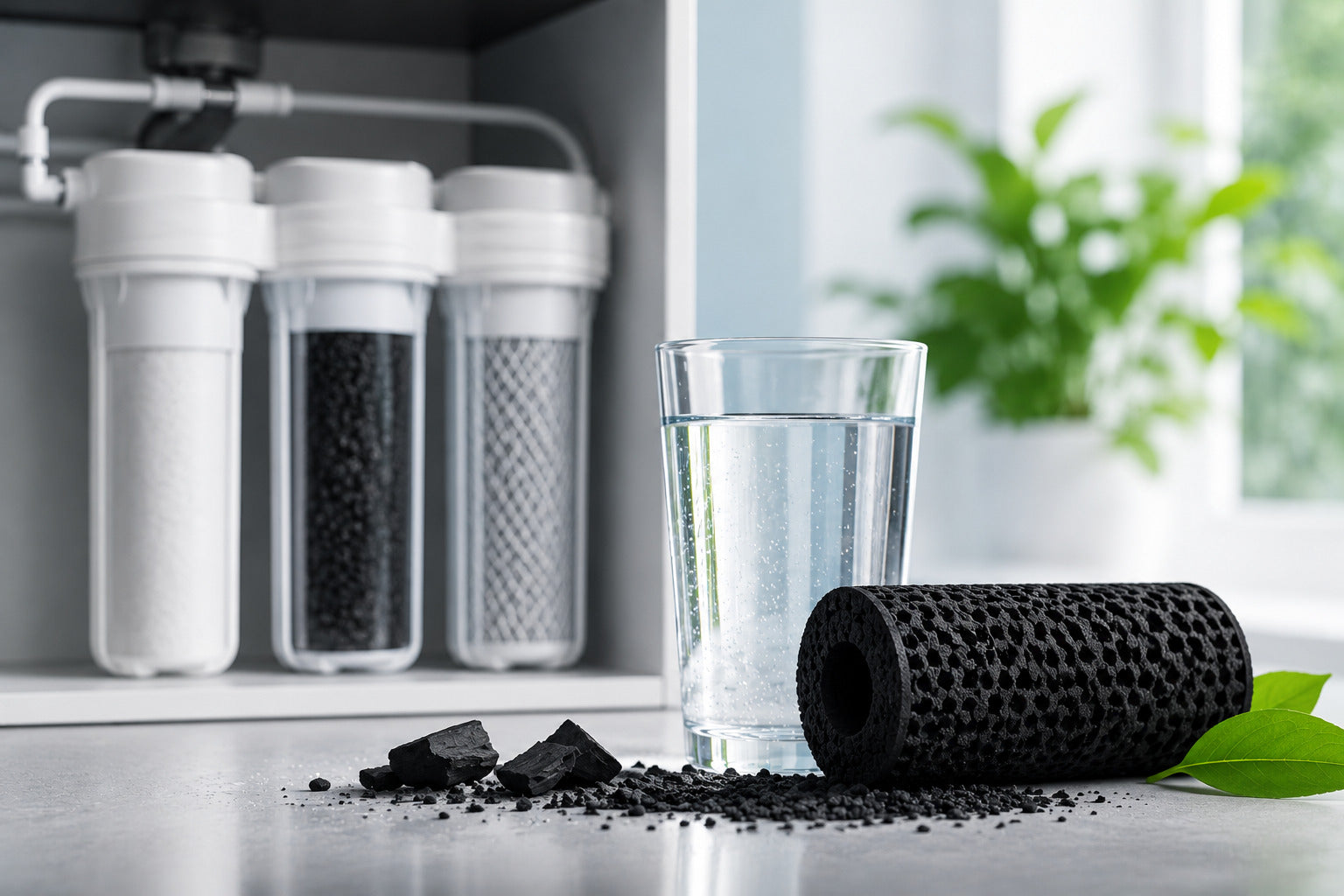
Carbon filtration isn't just for making water taste better; it is a scientific powerhouse for lead removal. Modern, high-quality carbon blocks are engineered with a massive surface area full of microscopic pores. Through a process called adsorption, lead molecules are chemically "stuck" to the carbon as water passes through. This is the cornerstone of modern filtration because it is highly effective, relatively affordable, and doesn't require electricity or wastewater.
The Power of Multi-Stage Systems
While a single carbon filter is good, a multi-stage system is better. These systems combine different technologies, like a sediment pre-filter to catch rust and dirt, followed by a specialized lead-adsorbing carbon block. By spreading the "work" across multiple stages, the lead-specific media stays effective for much longer. This comprehensive approach ensures that while you're removing lead, you're also tackling chlorine, PFAS, and microplastics.
Point-of-Use (POU) vs. Point-of-Entry (POE) Solutions
It is vital to understand the difference between these two.
- Point-of-Entry (POE): These are whole-house systems installed where the water enters your home. They protect every faucet, shower, and appliance. However, if the lead source is inside your home's plumbing (like old solder in your kitchen walls), a POE system won't catch it because the lead enters the water after the filter.
- Point-of-Use (POU): These are under-sink or countertop filters. They treat the water right before it hits your glass. For lead protection, POU systems are generally considered the safest bet because they are the final barrier before consumption.

Key Considerations for Selecting a Lead Reduction Filter
When we help our neighbors in New York choose a system, we tell them to look at four main factors:
- Flow Rate: How fast does the water come out? You don't want to wait five minutes for a glass of water.
- Capacity: How many gallons can it treat before the cartridge needs replacing?
- Filter Life: Most lead filters last between 6–12 months.
- Ease of Maintenance: Can you swap the cartridge yourself, or do you need a plumber?
For a deeper dive into these factors, check out our guides on Choosing a Water Filter and our In-Depth Essay: What to Understand When Choosing a Filter.
How a Lead Reduction Water Filter Protects Your Family
A certified filter acts as a physical and chemical gatekeeper. Whether it's a countertop RO system that uses a membrane to block lead ions or an under-sink carbon block system, the goal is the same: reduction to the lowest possible levels. In testing, some high-end systems have shown a 100% reduction in lead, effectively eliminating the risk from your drinking and cooking water.
Key Features of a High-Performance Lead Reduction Water Filter
Always verify the certification. The most important ones are:
- NSF/ANSI 53: The standard for "Health Effects," specifically covering lead reduction.
- NSF/ANSI 58: The standard for Reverse Osmosis systems.
- NSF 372: Verifies the filter itself is made of lead-free materials.
To be certified, filters are tested with water containing 150 parts per billion (ppb) of lead, which is ten times higher than the EPA's maximum allowable level. This rigorous testing ensures the filter can handle even extreme contamination scenarios. You can verify any product's claims by checking the NSF Lead Reduction Listings or reading about About NSF Certification on our site.
Advanced Multi-Stage Solutions: The XL7000 System
At Better Waters, we believe that the best lead reduction water filter is one that you don't have to think about. That's why we developed the XL7000.
The XL7000 is a professional-grade under-sink system designed specifically for the challenges of urban water environments like NYC. It utilizes 3M-developed technology to provide bottled-quality water directly from your existing faucet.
Why the XL7000 stands out:
- High Capacity: It can treat up to 6000 gallons of water. For an average family, that's a lot of lead-free cooking and drinking water before you ever need a replacement.
- Superior Flow: At 2.5 gallons per minute (GPM), it maintains your tap's pressure. No more "trickle" while trying to fill a pasta pot.
- Multi-Stage Protection: It doesn't just stop at lead. It is highly effective at reducing chlorine taste and odor, microplastics, and emerging contaminants like PFAS.
- Easy Maintenance: The cartridge is a simple "twist-and-lock" design. You can replace it in seconds without calling a plumber.
When Comparing NYC Tap Water Filtered Through XL7000, the difference in purity and taste is immediate. It transforms standard tap water into a crisp, clean resource that is safe for the whole family. Upgrade to the XL7000 Water Filtration System today for cleaner, safer water.
Frequently Asked Questions about Lead Removal
Can a filter completely eliminate lead from my water?
While "100%" is a bold claim, several high-quality filters have achieved near-100% or undetectable lead levels in independent lab testing. Systems certified to NSF/ANSI 53 or 58 are proven to reduce lead by at least 99.9%. Our XL7000 system uses advanced carbon block technology that is specifically designed to reach these high standards of performance.
Do whole-house systems remove lead from in-home plumbing?
This is a common misconception. A whole-house (Point-of-Entry) system treats the water as it enters your home. It is excellent for removing lead coming from the municipal supply or the city's service lines. However, if your home has lead solder in the pipes after the filter's installation point, the water can still pick up lead before it reaches your faucet. This is why we almost always recommend a Point-of-Use filter at the kitchen sink for the highest level of safety.
How often should I test my water and replace my filter?
We recommend testing your water at least once a year, especially if you live in an older building in NYC. As for the filter, most cartridges need to be replaced every 6–12 months.
Watch for these signs that it's time for a change:
- A noticeable drop in water pressure or flow rate.
- The filter's "change" light or indicator activates.
- You have reached the gallon capacity (6000 gallons for the XL7000).
Pro-Tip: Never run hot water through your lead-reduction filter. High temperatures can cause the adsorbed lead to "release" from the carbon media back into your water, and it can damage the filter's internal structure.
Conclusion
Protecting your home from lead isn't just about following regulations, it's about peace of mind. By choosing a certified lead reduction water filter, you are taking a proactive step toward long-term health and safety. Whether you are dealing with old plumbing in a Manhattan brownstone or simply want the best possible water for your children, the right filtration system makes all the difference.
Don't settle for "good enough" when it comes to your drinking water. Invest in a solution that offers verified performance and high-capacity protection. Explore the XL7000 Water Filtration System today and bring bottled-quality, lead-free water directly to your kitchen tap. Together, we can ensure that lead never gets ahead in your home.
Share:
How to Understand Carbon Water Filtration Works