
What to Know Before Choosing a Kitchen Tap Water Filter

Kitchen tap water filter options have never been more varied — or more important.
Here's a quick look at how professional systems compare to standard entry-level options:
| Filter Type | Best For | Contaminants Removed | Avg. Annual Cost |
|---|---|---|---|
| Standard Faucet/Pitcher | Entry-level use | Chlorine, some lead | $40–$90 |
| Professional Under-Sink | Families, health-focused users | Lead, PFAS, VOCs, heavy metals, microplastics | $50–$500 |
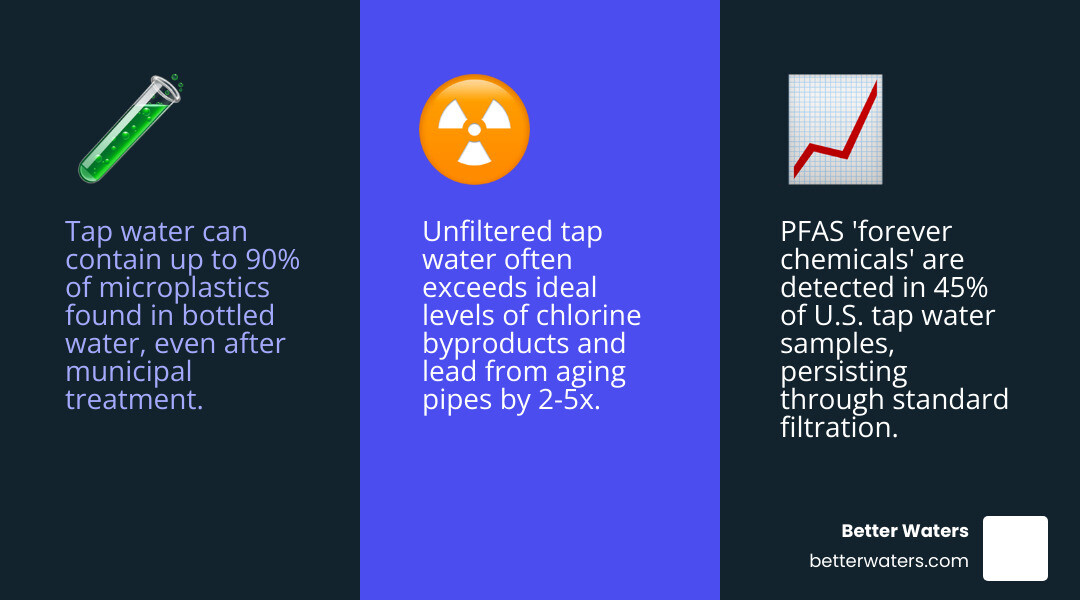
Most tap water in the US meets legal safety standards. But meeting legal standards and being ideal to drink are two different things. Chlorine, lead from aging pipes, PFAS ("forever chemicals"), and microplastics can all pass through municipal treatment and end up in your glass.
The right kitchen tap water filter removes those risks — without removing the beneficial minerals your body needs.
For a high-performance solution, we recommend the XL7000 Water Filtration System.
In this guide, we compare the top filter types side by side so you can find the best fit for your home, your water, and your budget.
The Superiority of Under-Sink Filtration for Your Home
As we navigate through April 2026, the conversation around water quality in places like Manhattan and the wider New York City area has shifted. We are no longer just asking if the water is "safe"; we are asking if it is excellent. While faucet-mounted filters are a popular entry point, we’ve found that for those seeking a permanent, high-performance solution, under-sink systems are the undisputed heavyweight champions.
The primary reason many of our neighbors in NYC are moving away from faucet-mounted options is aesthetics and functionality. Let’s be honest: a bulky plastic attachment can ruin the look of a high-end kitchen faucet. Beyond the look, there's the "wait factor." Faucet filters often slow your flow rate to a crawl—sometimes as low as 0.5 gallons per minute (GPM). If you're trying to fill a large pot for pasta, you might as well start a new hobby while you wait.
Under-sink systems offer a discreet installation. They hide beneath the cabinet, connecting directly to your cold water line. This means you get Filtered is Better water without the clutter.

When choosing a system, we recommend considering three key factors:
- Flow Rate: Look for a system that doesn't make you sacrifice your patience.
- Household Size: Larger families need higher capacity so they aren't changing filters every few weeks.
- Contaminant Profile: NYC water has unique challenges, including potential lead from older building pipes and chlorine used for treatment.
| Feature | Faucet-Mounted Filters | Under-Sink Systems (XL7000) |
|---|---|---|
| Capacity | 100 – 320 Gallons | 6000 Gallons |
| Flow Rate | ~0.5 GPM (Slow) | 2.5 GPM (Full Pressure) |
| Replacement Frequency | Every 2–4 Months | Once a Year |
| Visual Impact | Bulky, attached to tap | Hidden under the sink |
| Filtration Depth | Basic Carbon | Multi-Stage Sub-Micron |
For those living in high-rise apartments or historic brownstones, the 6 Reasons to Install an Under Sink Water Filter often come down to the sheer convenience of having "bottled water quality" on tap at all times.
Advanced Multi-Stage Filtration and the Power of Carbon
At the heart of any effective kitchen tap water filter is the science of carbon. But not all carbon is created equal. In our experience at Better Waters, we’ve seen how the evolution of carbon block technology has revolutionized home filtration.
Most basic filters use Granular Activated Carbon (GAC), which is essentially loose bits of carbon. While okay for basic taste improvement, it can allow "channeling," where water finds a path of least resistance and bypasses the filter media entirely. We prefer the advanced carbon block method. This involves compressing carbon into a dense, solid form that forces every single drop of water through a complex labyrinth of pores.
Our flagship system, the XL7000 Water Filtration System, utilizes a 3M-developed multi-stage technology that takes this even further. It doesn't just use one layer; it employs a sub-micron filtration process. This means it can trap particles no larger than 0.2 micron. To put that in perspective, a human hair is about 70 microns wide. We are talking about microscopic precision.
The benefits of this multi-stage approach are clear:
- Massive Capacity: While a standard faucet-mounted filter might handle 100 gallons, the XL7000 handles 6000 gallons. That is 60 times the lifespan.
- High Flow: Because of the advanced engineering, we can maintain a flow rate of 2.5 GPM. You won't even notice a drop in pressure.
- Comprehensive Protection: It tackles everything from chlorine taste and odor to more sinister threats like lead and cysts.
We believe that Choosing a Water Filter should be about long-term reliability. When you install a professional-grade system, you're investing in a Point-of-Use Water Filter that just makes sense for the modern home.
Understanding Certifications and Contaminant Removal
When you're shopping for a kitchen tap water filter, don't just take the manufacturer's word for it. Look for the "seal of approval." In our industry, the gold standard comes from organizations like the National Sanitation Foundation (NSF) and the American National Standards Institute (ANSI). For general background on drinking water standards in the United States, the U.S. Environmental Protection Agency is also a useful external resource.
Understanding these codes is vital for your health. Here is a breakdown of what to look for:
- NSF/ANSI 42 (Aesthetic Effects): This is the most common certification. It ensures the filter effectively reduces "aesthetic" contaminants like chlorine, which affects taste and smell. If your water tastes like a swimming pool, you need a filter that hits this mark.
- NSF/ANSI 53 (Health Effects): This is the "must-have" for safety. It certifies that the filter reduces specific health-related contaminants, such as lead, mercury, and volatile organic compounds (VOCs).
- NSF/ANSI 372: This ensures the system itself is made of lead-free materials.
- NSF/ANSI 401 (Emerging Compounds): This is the new frontier. It covers "incidental contaminants" like pharmaceuticals, pesticides, and new-age chemicals that have recently started appearing in water supplies.
For more detail on why these matter, check out our guide About NSF Certification. We always tell our clients that checking for these certifications is the only way to ensure you aren't just buying a "placebo" filter. Professional-grade systems prioritize these standards to ensure the highest level of safety and performance.
How a Kitchen Tap Water Filter Removes Lead and PFAS
In 2026, three words dominate the water quality headlines: Lead, Microplastics and PFAS.
Heavy metals -- lead and copper -- remain a significant concern in NYC. While the city's source water is high quality, it travels through an aging infrastructure. Many older buildings still have lead service lines or lead solder in the plumbing. A high-quality kitchen tap water filter acts as the final line of defense. Advanced carbon blocks and ion-exchange media are particularly effective at "grabbing" lead ions before they reach your glass.
PFAS, or "forever chemicals," are a tougher beast. These synthetic chemicals are used in everything from non-stick pans to firefighting foam. They don't break down in the environment (hence the name) and have been linked to various health issues. According to independent tests, only a select few filters reduce PFAS.
Beyond these, a robust system will also address:
- Volatile Organic Compounds (VOCs): Often found in urban runoff.
- Arsenic: A concern for those on well water or in specific geographic pockets.
- Microplastics: Tiny plastic fibers that have become ubiquitous in global water sources.
The 6 Benefits of Filtered Tap Water go beyond just avoiding "the bad stuff"—it's about the peace of mind that comes with knowing your family is drinking the cleanest water possible.
Maintenance Tips for Your Kitchen Tap Water Filter
Maintenance shouldn't be a headache. If a filter is too hard to maintain, people stop using it. That's why we advocate for systems with "easy-replace" cartridges.
- Track Your Filter Life: Many faucet-mount filters have a light that turns from green to red. The truth is, these color changes have nothing to do with your individual usage. For under-sink systems, we recommend a simple annual calendar reminder. Because the XL7000 has a 6000-gallon capacity, most NYC households only need to change it once or twice a year.
- Watch for Flow Changes: If your water pressure suddenly drops, it's a sign the filter is doing its job — it's full of sediment and contaminants. It's time for a swap.
- Sanitize During Changes: When you replace an under-sink cartridge, it's a great time to wipe down the area and check for any slow leaks in your plumbing.
- DIY Installation: You don't always need a plumber. Most modern systems use "twist-and-lock" mechanisms. If you can change a lightbulb, you can likely change an under-sink filter.
For a deeper dive into the technical side of upkeep, read our In-Depth Essay: What to Understand When Choosing a Filter.
Long-Term Cost Savings and Environmental Impact
We often hear the argument that "bottled water is just easier." But is it? Lugging heavy cases from a bodega in New York City up to a third-floor walk-up is nobody's idea of a good time. And the costs? They add up faster than a NYC taxi meter.
Let’s look at the math for 2026. A standard under-sink filter like the XL7000 provides 6000 gallons of water. To get that same amount from bottled water, you would need to buy approximately 45,000 half-liter bottles. Even at a discount price, you’re looking at thousands of dollars. In contrast, the annual replacement cost for a high-quality filter cartridge is a fraction of that.
Then there is the environmental toll. 3 Ways an Under-the-Sink Water Filter Helps Protect the Environment include:
- Eliminating Plastic Waste: You're preventing thousands of plastic bottles from ending up in landfills or the ocean.
- Reducing Carbon Footprint: Think of the fuel required to ship heavy water bottles across the country. Your tap is already connected to your house—use it!
- Sustainable Sourcing: Residents across NYC are becoming more eco-conscious, seeking out high-capacity systems that reduce the need for single-use plastics.
Switching to a kitchen tap water filter is one of the easiest ways to live a more sustainable life. We’ve detailed the specific numbers in our article on the Cost Savings of Switching from Plastic Water Bottles to an Under Sink Water Filter.
Frequently Asked Questions
Can these filters handle well water sources?
While most of our clients in New York City are on municipal water, we do get questions about private wells. Standard carbon filters are excellent for taste and odor, but well water often requires a more customized approach to handle high iron, sulfur, or bacterial concerns. If you are on a well, we recommend a water test first. Professional-grade systems can often be configured to address specific water quality reports.
Do I need a professional plumber for installation?
For faucet-mounted filters, absolutely not—they screw right onto the aerator. For under-sink systems, it depends on your comfort level. Most of our systems are designed for DIY installation with standard tools. However, if you're uncomfortable working with your cold water valve, a quick 30-minute visit from a local NYC plumber can give you peace of mind.
How does filtration affect my kitchen's water pressure?
This is where quality matters. A cheap kitchen tap water filter will often significantly restrict flow. However, professional-grade systems like the XL7000 are engineered to handle a 2.5 GPM flow rate. This means you can fill your coffee pot or sink just as fast as you did before the filter was installed.
Conclusion
At Better Waters, we believe that clean water is the foundation of a healthy home. We’ve seen over the course of many years how the right kitchen tap water filter can transform the daily lives of New Yorkers. Whether you're looking to remove lead, eliminate the taste of chlorine, or simply do your part for the environment by ditching plastic, there is a solution that fits your needs.
The XL7000 represents the pinnacle of this effort—combining 3M-developed carbon technology with a massive 6000-gallon capacity and the flow rate that a busy NYC kitchen demands. Don't let your faucet fail you; give your family the gift of 5 Healthy Benefits of Clean Drinking Water.
Ready to upgrade your kitchen? Explore the XL7000 Water Filtration System and join the thousands of NYC residents who have chosen a better way to hydrate.
Share:
A Deep Dive into the Professional XL7000 Water Filter
Don't Let Dirt Win with These Top Sediment Filters