
Why Your Tap Water Tastes Off — And How to Fix It
Improve tap water taste with these proven methods:
- Filter it — A carbon-based filter (pitcher, faucet, or under-sink) removes chlorine, odors, and many contaminants
- Chilling it — Cold water at 4–10°C masks bitterness and salinity naturally
- Aerate it — Pour water between containers or let it sit uncovered to off-gas chlorine
- Infuse it — Add citrus slices, cucumber, mint, or frozen berries for natural flavor
- Carbonate it — A home soda maker can mask flat or chemical notes
- Test it first — Knowing what's in your water helps you pick the right fix
Let's be honest — if your tap water tastes like a swimming pool, smells faintly of rotten eggs, or leaves a metallic aftertaste, you're not going to drink enough of it. And you're far from alone.
Aesthetic issues like taste, smell, and color are among the top reasons people skip tap water entirely, often turning to plastic bottles instead. That's an expensive habit, and not a great one for the planet either.
The good news? Most tap water taste problems have a clear cause and a straightforward fix.
The taste of your water is shaped by a surprising mix of factors — the source it comes from, the chemicals used to treat it, the pipes it travels through, and even the minerals dissolved along the way. Understanding these factors is the first step to actually doing something about them.
Why Does My Tap Water Taste Off?
Living in New York City, we often hear that we have the "champagne of tap water." While our source water is high quality, by the time it reaches your glass where you actually live, it has traveled through miles of aging infrastructure. If you've noticed a change in your water's profile as of April 2026, there are several scientific reasons why.
The "Swimming Pool" Effect: Chlorine and Chloramine
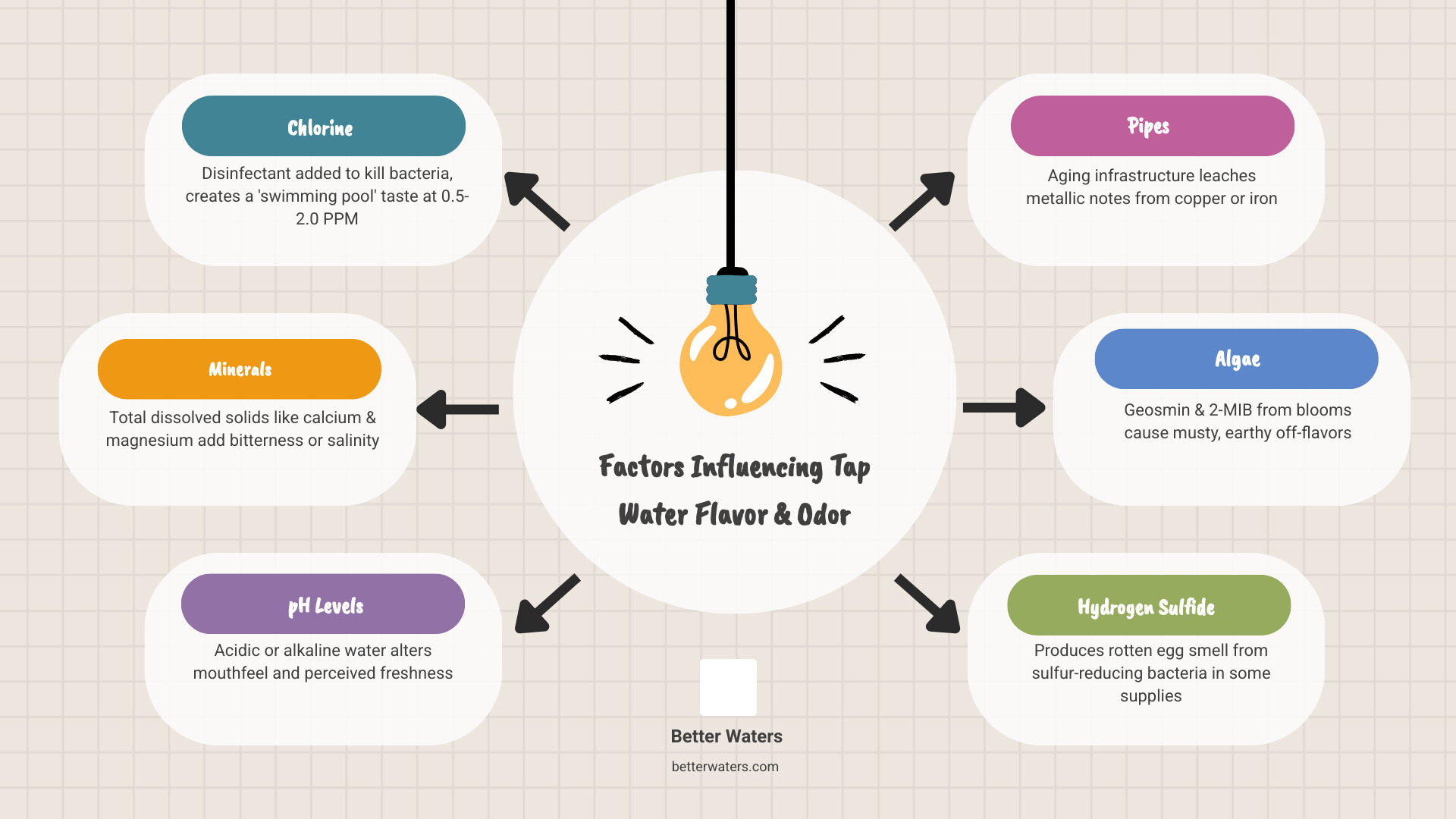
The most common complaint we hear is that the water tastes like a public pool. This is due to chlorine and chloramine. Municipalities use these to disinfect the water and keep it safe from bacteria as it travels to your home. While essential for safety, chlorine can be smelled and tasted at levels as low as 1 PPM. Most public supplies sit between 0.5 and 2.0 PPM, meaning almost everyone can detect that chemical "zip."
Earthy and Musty Notes: Algae Blooms, Geosmin, and 2-MIB
Have you ever poured a glass and thought it smelled like a damp basement or fresh dirt? You aren't imagining things. This usually happens during seasonal changes when algae blooms occur in reservoirs. These blooms release natural compounds called geosmin and 2-methylisoborneol (2-MIB). Even after standard treatment, these compounds can persist. While they aren't harmful, they are incredibly potent; the human nose can detect them at infinitesimal levels. For more on this, check out Why Your Tap Water Might Be Tasting a Little Different.
The Metallic Tang: Iron, Copper, and pH
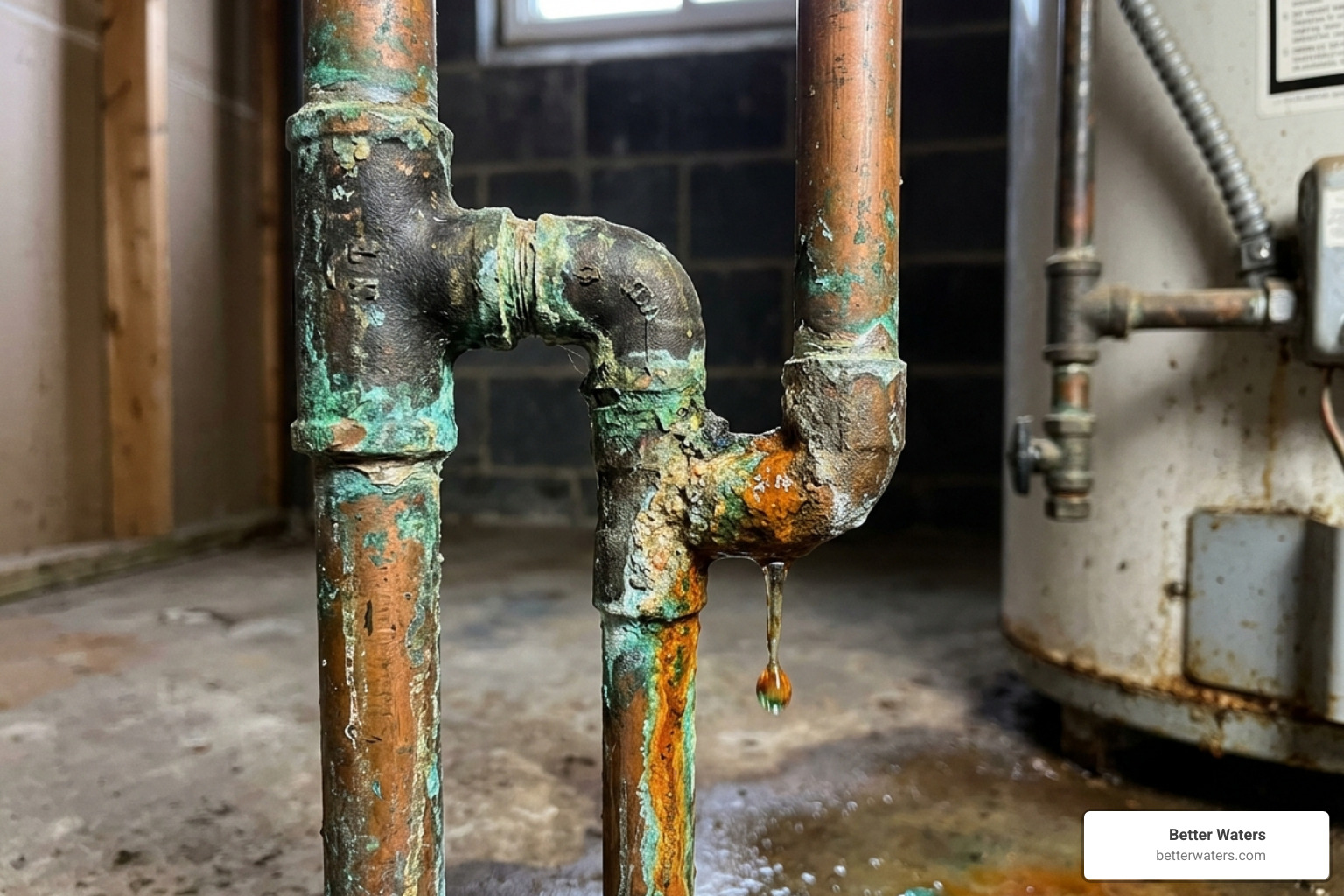
If your water has a harsh metallic taste, the culprit is often the plumbing. As water sits in older copper or galvanized iron pipes, metals can leach into the supply. In NYC, the chemistry of the water can sometimes interact with older building pipes to create these notes. Copper can begin to alter taste at just 0.4-0.8 PPM. Furthermore, if your water has a low pH (below 6.5), it can taste bitter or sour and accelerate the corrosion of your pipes. You can read more about this in Why Does NYC's Tap Water Taste Metallic?.
The "Rotten Egg" Smell: Hydrogen Sulfide
This is one of the most offensive odors. It’s caused by hydrogen sulfide gas. In our area, this is less common in city water but can occur if there is bacterial growth in a water heater or if there are issues with specific plumbing fixtures. It’s a classic sign that something needs to be addressed, which we cover in 4 Common Issues with Tap Water.
Total Dissolved Solids (TDS)
TDS refers to the minerals, salts, and metals dissolved in your water. While some minerals like calcium and magnesium can give water a "sweet" or "crisp" taste, an excess of TDS can make water feel heavy, salty, or bitter. For a deeper dive into the science of these flavors, The Ultimate Tap Water Taste Guide provides an excellent breakdown.
Quick Ways to Improve Tap Water Taste Without Equipment
You don't always need a high-tech solution to see an immediate improvement. If you're looking to improve tap water taste right now, try these simple kitchen hacks.
The Power of the Chill
Temperature is the easiest way to manipulate taste. Cold water (ideally between 4°C and 10°C) actually suppresses our taste buds' ability to detect bitterness and salinity. It’s the same reason a cheap soda tastes fine ice-cold but becomes unpalatably sweet and chemical-like when warm. Keeping a glass pitcher in the refrigerator ensures your water is always at its most refreshing.
Aeration and Off-Gassing
Since chlorine is a gas, it wants to escape the water. If you pour your tap water into a wide-mouth pitcher and let it sit uncovered in the fridge for 24 hours, much of the chlorine will naturally evaporate. You can speed up this process by "aerating" the water—simply pour it back and forth between two containers several times. This introduces oxygen and helps volatile gases escape.
Container Choice: Glass and Stainless Steel
Plastic containers can leach flavors into your water, especially if they are old or have been exposed to heat. To keep your water tasting "pure," always use glass or high-quality stainless steel. Glass is non-reactive, meaning it won't add any unwanted "plasticky" notes to your drink. This is a key step in How to Make Your Tap Water Taste Like Bottled or Spring Water.
The Boiling Method
Boiling water for about 5 to 15 minutes is an effective way to drive off chlorine and some organic compounds that cause musty odors. However, be careful: boiling also concentrates minerals. If your water is already high in TDS, boiling it for too long might actually make it taste more metallic or bitter.
Add Some Fizz
If you have a home carbonation machine, the bubbles can do wonders for masking "flat" or slightly chemical tastes. Carbonation slightly lowers the pH of the water, giving it a sharper, more refreshing bite that mimics premium sparkling mineral waters.
Natural Infusions to Improve Tap Water Taste
If you find plain water boring, nature provides the best flavor enhancers. Unlike store-bought "flavor drops" that are full of artificial sweeteners, natural infusions add vitamins and a clean aroma.
- Citrus Slices: Lemon, lime, and orange are the gold standard. They provide acidity that cuts through metallic notes.
- Cucumber: This provides a "spa-like" freshness that is quite effective at masking earthy or musty smells.
- Mint Leaves: Slap the leaves between your hands before adding them to release the oils for a cooling sensation.
- Frozen Berries: Use frozen raspberries or blueberries as ice cubes. They gently flavor the water as they melt without making it sugary.
- Ginger Coins: A few thin slices of fresh ginger add a sophisticated, spicy zing.
- Herbal Sprigs: Rosemary and basil might sound like they belong in a pasta sauce, but they pair beautifully with citrus in a water pitcher.
Interestingly, many people ask How to make the tap water taste soft when they travel. While NYC water is naturally quite soft, adding a tiny pinch of mineral salt to very soft or distilled water can actually make it taste more "rounded" and less "flat."
Advanced Filtration: The Best Way to Improve Tap Water Taste
While hacks and infusions are great, they are often just masking the problem. To truly improve tap water taste at the source, you need a high-quality filtration system.
The Science of Adsorption
Most taste-improvement filters rely on activated carbon. Think of activated carbon like a microscopic sponge with millions of tiny pores. Through a process called adsorption, contaminants like chlorine, pesticides, and industrial chemicals stick to the surface of the carbon, leaving the water clean.
Carbon filtration is a core component of modern water purification, and advanced multi-stage systems like the Better Waters XL7000 offer superior taste improvement. While a simple pitcher filter uses loose carbon granules, the XL7000 uses high-density carbon block technology developed by 3M. This ensures that every drop of water has maximum contact time with the filter media.
Why Multi-Stage Matters
A single-stage filter might catch chlorine, but it might miss the fine sediment or emerging contaminants like PFAS (often called "forever chemicals"). A multi-stage system provides a comprehensive solution:
- Sediment Pre-filtration: Catches dirt, rust, and micro-particulates.
- Carbon Block: Targets chlorine, chloramine, and bad odors.
- Specialized Media: Reduces lead, cyst, and chemicals like PFAS.
Using a system like this provides 6 Benefits of Filtered Tap Water, ranging from better hydration to saving money on bottled beverages.
Certifications to Look For
When shopping for a filter, don't just take the manufacturer's word for it. Look for NSF/ANSI certifications:
- NSF/ANSI 42: Specifically covers "Aesthetic Effects"—meaning it is certified to improve taste, odor, and appearance (primarily chlorine removal).
- NSF/ANSI 53: Covers "Health Effects"—meaning it reduces specific contaminants like lead, mercury, and VOCs.
- NSF/ANSI 401: Reduction of microplastics.
Using Carbon Filtration to Improve Tap Water Taste
We designed the XL7000 specifically for the challenges of urban water. In a city like New York, you need a filter that can handle high flow rates without sacrificing quality.
The XL7000 features 3M-developed technology that is a massive step up from basic filters. It has a huge 6,000-gallon capacity, meaning a typical household only needs to change the cartridge once a year. And with a 2.5 GPM (gallons per minute) flow rate, you won't be standing at the sink forever waiting for a glass to fill.
One of the most important aspects of carbon filtration today is the reduction of PFAS. You can count on the XL7000 system to provide this protection, ensuring your water isn't just tasty, but safe. There are 6 Great Reasons to Filter Your Tap Water, but the peace of mind regarding chemical runoff is often at the top of the list.
For our local neighbors, we've even done the legwork Comparing New York City Tap Water Unfiltered with NYC Tap Water Filtered Through the XL7000. The difference in clarity and crispness is immediately noticeable. Ready to transform your tap water? Get the XL7000 Water Filtration System today for bottled-quality water straight from your faucet.
Diagnosing and Testing Your Water Quality
Before you invest in a system, it helps to know exactly what you are fighting. Here is how we recommend you start your "water detective" work.
1. Read Your Consumer Confidence Report (CCR)
If you are on city water in NYC, the Department of Environmental Protection (DEP) publishes an annual report. This tells you what is in the water at the source. However, it doesn't tell you what 100 miles of transit and your specific building's pipes are adding to the mix.
2. Use a TDS Meter
While a TDS meter doesn't tell you which contaminants are present, it gives you a baseline of how many dissolved solids are in your water. If your tap water reads 50 and your filtered water reads 45, your filter is likely working on taste/odor (chlorine) rather than mineral removal. But guess what? The TDS level of NYC water and a bottle of say Poland Spring is about the same: 50.
3. Professional Lab Testing
If you have a persistent metallic taste or a "sweet" taste that seems new, a lab test is the way to go. This is especially important for lead detection in older Manhattan apartments. Testing is one of the 6 Great Reasons You Should Filter Tap Water, as it removes the guesswork.
4. Check Your Aerators
Sometimes the "bad taste" is literally an inch away from your glass. Unscrew the aerator (the little mesh screen) on the end of your faucet. If it's clogged with blue-green scales (copper) or orange gunk (iron), that is likely affecting your water's flavor. A quick soak in vinegar can work wonders.
Frequently Asked Questions about Water Flavor
How does multi-stage carbon filtration improve water taste?
Multi-stage carbon filtration is the "gold standard" for flavor. Activated carbon works through adsorption, where the porous surface of the carbon acts like a magnet for organic compounds and chemicals.
In a system like the XL7000, we use a high-density carbon block. This effectively removes:
- Chlorine and Chloramine: The "pool" smell and taste.
- VOCs (Volatile Organic Compounds): Industrial chemicals that can have a medicinal or fuel-like taste.
- Microplastics: You won't see or taste them, but be assured the XL7000 is NSF-certified to counter them.
- PFAS: Emerging contaminants that, while often tasteless, are a major health concern in 2026.
- Particulates: Rust and sediment that make water look cloudy and taste "gritty."
Unlike Reverse Osmosis (RO), which can sometimes make water taste "empty" by removing every single mineral, our carbon filtration maintains a healthy balance of minerals like calcium and magnesium. This results in a "crisper" taste that feels more natural—similar to high-end spring water.
Why does my water taste like rotten eggs or sulfur?
This is almost always caused by hydrogen sulfide gas. This gas is produced by sulfur-reducing bacteria that live in low-oxygen environments. If the smell only happens when you run the hot water, the problem is likely your water heater's magnesium anode rod, which can react with bacteria to produce the gas. If it's in the cold water too, it could be a sign of a localized plumbing issue or, if you're on a private well, a sign that the well needs shock chlorination.
How can I make filtered water taste less "flat"?
When you remove everything from water (like through distillation or RO systems), it can taste "flat" or "dead." This is because our tongues actually expect a tiny bit of mineral content and dissolved oxygen. To fix this:
- Aeration: Pour the water between two glasses to "wake it up" with oxygen.
- Remineralization: You can add a remineralization cartridge to your system or use a tiny pinch of high-quality mineral salt (like Himalayan or Celtic salt) to a gallon of water.
- Alkaline Cartridges: Some filters include a final stage that adds back trace amounts of calcium and magnesium to raise the pH and improve the "mouthfeel" of the water.
Conclusion
At Better Waters, we believe that you shouldn't have to choose between convenience, cost, and taste. Improve tap water taste today by moving away from the "plastic bottle tax" and toward a sustainable, professional-grade solution in your own kitchen.
Whether you start with a simple glass pitcher in the fridge or upgrade to the advanced XL7000 filtration system, the goal is the same: crisp, clean, and refreshing water that makes hydration a pleasure rather than a chore. With a 6000-gallon capacity and 3M-developed technology, the XL7000 is the ultimate way to bring bottled-quality water directly to your New York City tap.
Ready to transform your tap? More info about XL7000 filtration systems is just a click away. Cheers to better water!
Share:
4 Common Issues with Tap Water | Better Waters Water Filtration
Stop Drinking the Pipes with These NYC Water Filters