
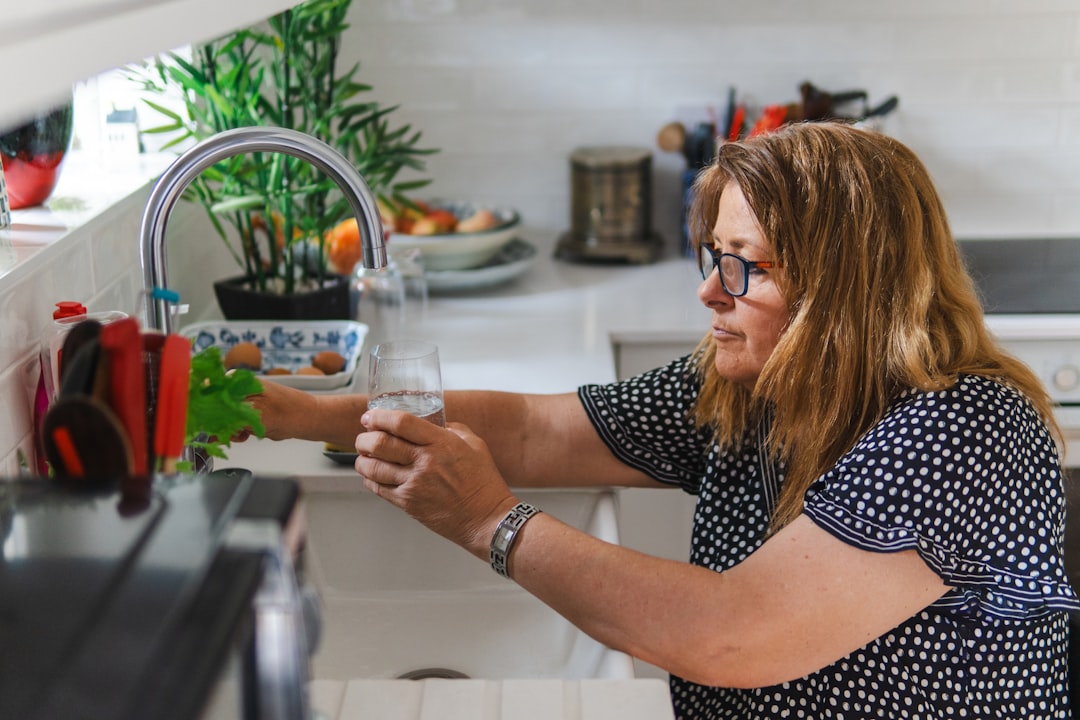
Why a Water Filter Maintenance Guide Is Essential for Clean, Safe Water
A water filter maintenance guide is the single most important resource any homeowner or office manager can follow to keep their filtration system working the way it was designed to.

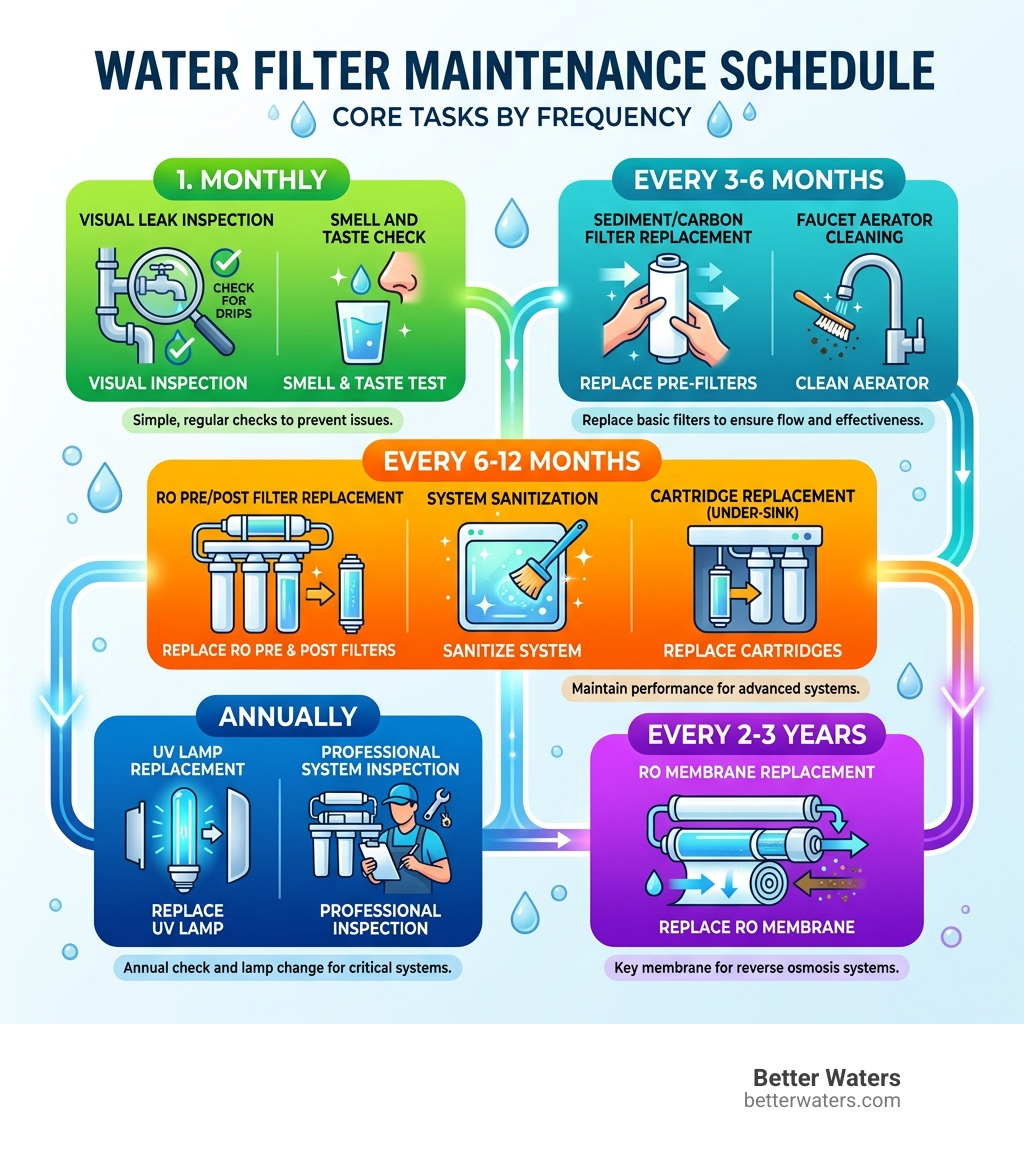
Here is a quick overview of the core maintenance tasks by frequency:
| Task | Frequency |
|---|---|
| Visual leak inspection | Monthly |
| Smell and taste check | Monthly |
| Sediment/carbon filter replacement | Every 3-6 months |
| Faucet aerator cleaning | Every 3-6 months |
| RO pre/post filter replacement | Every 6-12 months |
| System sanitization | Every 6-12 months |
| Cartridge replacement (under-sink) | Every 6 months |
| UV lamp replacement | Annually |
| RO membrane replacement | Every 2-3 years |
| Professional system inspection | Annually |
Most people install a water filter and assume the job is done. It is not.
Filters trap contaminants over time. As they reach capacity, they of course become less effective at capturing contaminants. In fact, with some poorly constructed filters, they can even start releasing those trapped pollutants back into your water. Studies show bacteria can also colonize spent filter media, meaning an overdue filter may actually make your water less safe than unfiltered tap water. (Note that won't happen with the XL7000, which is certified by the manufacturer to stop bacteria from entering product water.)
This is especially serious when it comes to lead. There is no safe level of lead in drinking water, and even a certified filter will fail to protect you if it is not properly maintained. Filters certified to NSF/ANSI Standard 53 are highly effective at removing lead, but only when installed, used, and serviced correctly.
For systems like the XL7000, which uses advanced multi-stage carbon filtration to handle up to 6000 gallons, following a consistent maintenance routine is what separates a system that lasts years from one that quietly fails you.
The good news? Maintenance is simpler than most people expect. It mostly comes down to staying on schedule, knowing your system, and catching small issues before they become expensive ones.
Understanding Your System: From Carbon Blocks to the XL7000
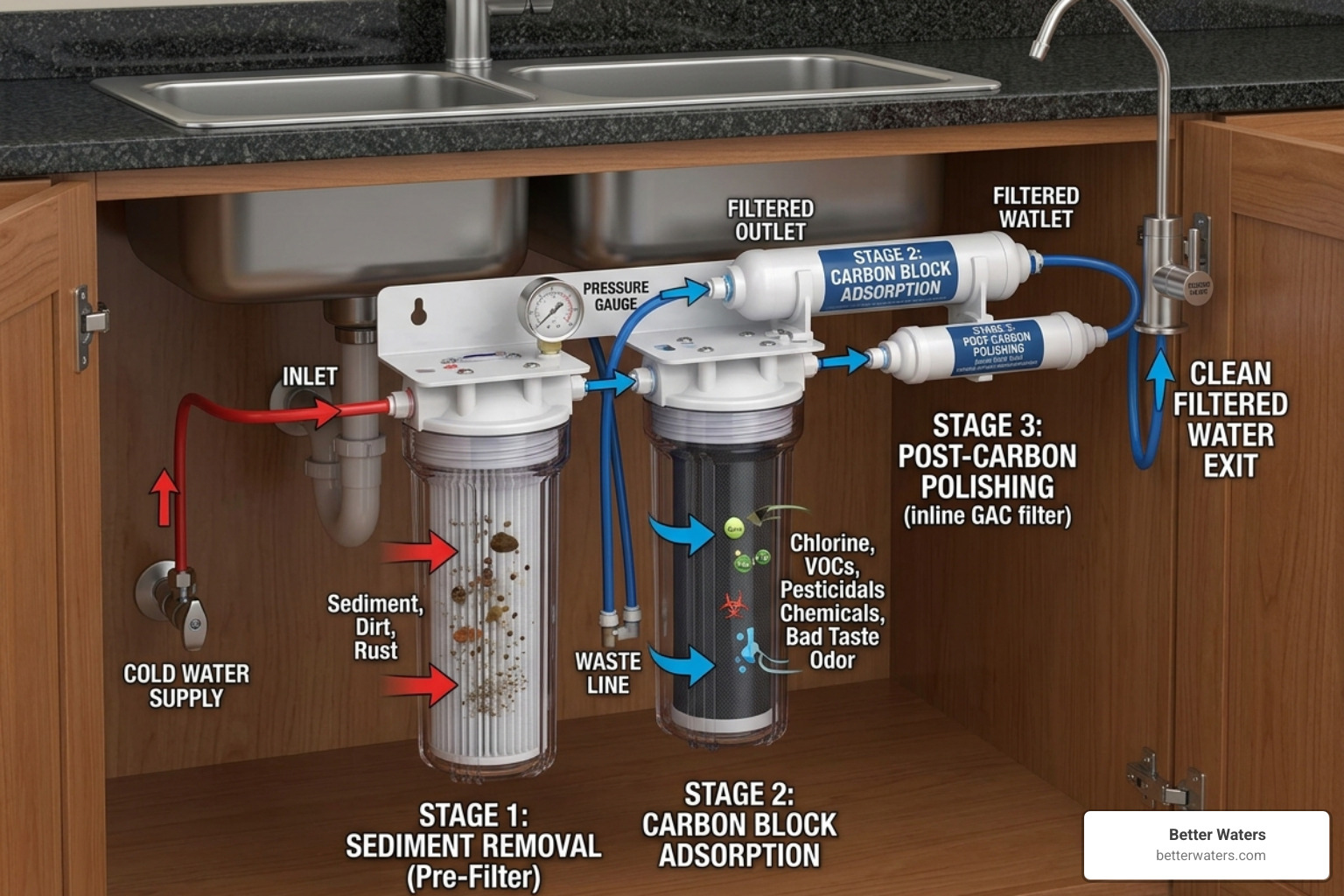
To master your water filter maintenance guide, you first need to understand what is happening under your sink. Most modern high-performance systems rely on carbon filtration. Carbon works through a process called adsorption, where contaminants like chlorine, lead, and volatile organic compounds (VOCs) stick to the surface of the carbon media like iron filings to a magnet.
In New York City, we deal with unique water challenges. While our municipal water is often celebrated, the aging infrastructure of Manhattan and the surrounding boroughs means lead from old pipes and sediment from water main breaks are constant risks. This is where a system like the XL7000 shines. Developed with 3M technology, it isn't just a simple charcoal filter; it is a professional-grade multi-stage powerhouse.
The XL7000 offers a massive 6000-gallon capacity and a 2.5 GPM (gallons per minute) flow rate. This means you get bottled-quality water directly from your tap without the slow drip associated with cheaper filters. However, even a high-capacity system needs a watchful eye. Understanding the nuances of Choosing a Water Filter helps you realize that capacity isn't just about the number of gallons; it's about the quality of the media inside.
When we look at In-Depth Essay: What to Understand When Choosing a Filter, we see that certifications like NSF/ANSI 42 (for aesthetics like taste and odor) and NSF/ANSI 53 (for health effects like lead and cysts) are the gold standard. Maintaining these standards requires replacing the internal media before it becomes "exhausted." If you wait until the water tastes bad, you've likely been drinking insufficiently filtered water. According to Scientific research on lead in drinking water, consistent maintenance is the only way to ensure these health-protecting barriers remain intact.
Step-by-Step Water Filter Maintenance Guide for Peak Performance
Ready to get your hands slightly damp? Don't worry, maintaining a professional system is designed to be a DIY-friendly process. Whether you are in a high-rise in Manhattan or a brownstone in Brooklyn, the steps remain largely the same.
- Prepare the Area: Clear out the cleaning supplies under the sink so you have room to move. Lay down a towel to catch the small amount of water that will inevitably escape when you open the housing.
- Shut Off and Relieve Pressure: Turn the cold water supply valve to the "off" position. Open the dedicated filtered water faucet to let the remaining pressure bleed out. This is a crucial step: trying to unscrew a pressurized housing is a recipe for a localized indoor flood.
- Remove the Cartridge: For the XL7000, this is a simple "twist and click" motion. For older systems, you may need a housing wrench.
- Clean the Housing: If your system uses a permanent housing with replaceable "drop-in" cartridges, wash the inside of the housing with mild dish soap and warm water. This prevents biofilm, a slimy layer of bacteria, from taking up residence.
- Sanitize (If Needed): Every 6–12 months, it is wise to sanitize. A small amount of fragrance-free bleach (about a capful per liter of water) can be used to flush the lines, followed by a thorough rinsing.
- Check the O-Rings: These little rubber loops are the only thing standing between you and a puddle. Inspect them for cracks. Always apply a thin layer of food-grade silicone grease to the O-ring. Pro Tip: Never use Vaseline or petroleum-based products, as they can degrade the rubber and cause leaks.
- Install and Flush: Click the new cartridge into place. Turn the water back on slowly. Run the water for 5–10 minutes to "flush" the system. This clears out any carbon "fines" (tiny black dust particles) and activates the media.
Monthly and Quarterly Tasks in Your Water Filter Maintenance Guide
You don't need to perform a full teardown every month, but a five-minute "health check" can save you hours of cleanup later.
- The "Dry Hand" Test: Once a month, reach under your sink and run your hand along the base of the filter and the connections. If you feel even a hint of moisture, tighten the fittings. Small drips often precede major leaks.
- Faucet Aerator Cleaning: In NYC, sediment can build up in the tiny screen at the tip of your faucet. Unscrew it every three months and rinse out the grit. This ensures your 2.5 GPM flow rate stays high.
- Visual Check for Mold: Dark, damp cabinets are magnets for mold. Ensure your under-sink area is well-ventilated and dry.
- Monitor Usage: If you have a large family or a busy office, you might hit that 6000-gallon limit faster than an apartment with a single resident. Use a calendar reminder or a smart water meter to track your progress.
Annual Requirements for a Complete Water Filter Maintenance Guide
Once a year, it's time for the "Deep Dive." Even the most robust systems benefit from an annual reset.
- Full Cartridge Swap: Even if you haven't hit the gallon limit, we recommend a fresh cartridge every 12 months.
- UV Lamp Replacement: If your system includes a UV stage for bacteria, that bulb needs to go once a year. UV lamps lose their germicidal effectiveness even if they are still glowing blue.
- Professional Inspection: For complex installations or office settings, calling a Top Water Filter Company in New York for an annual check-up ensures that your pressure regulators and bypass valves are functioning perfectly.
- System Flush: After any long vacation (more than 5 days), flush your lines for 5–10 minutes. Stagnant water is never a good thing for filtration media.
Troubleshooting Common Filtration Issues
Sometimes, things don't go perfectly. If your water starts acting strange, don't panic. Most issues have simple fixes.
Low Water Flow: This is the most common complaint. Usually, it means your filter is doing its job! It has become so clogged with sediment and contaminants that water can no longer pass through easily. If your flow drops significantly (a pressure drop of more than 10-15 psi), it's time to change the cartridge. Also, check your faucet aerator, it might just be a bit of grit at the spout.
Unusual Tastes or Odors: If your water suddenly tastes like chlorine or has an "earthy" note, your carbon media is likely exhausted. It can no longer adsorb chemicals. Replace the cartridge immediately. If the taste persists after a replacement, you may need to sanitize the lines to remove biofilm.
Cloudy Water or Air Bubbles: If you just changed your filter, this is completely normal. It's just "micro-bubbles" of air trapped in the new carbon media. It will clear up after a few days of use. If the water is milky and doesn't clear after sitting in a glass, contact us for a water quality check.
Leaks After Maintenance: If you just swapped a cartridge and see a drip, 90% of the time it's the O-ring. It's either pinched, dirty, or needs more silicone grease. Re-open the housing, wipe the O-ring clean, re-grease it, and ensure it is seated perfectly flat.
Frequently Asked Questions about Filter Upkeep
How do I know if my filter needs immediate replacement?
While we provide a water filter maintenance guide with schedules, your senses are often the best indicators. If you notice a drop in water pressure, a return of that "swimming pool" chlorine smell, or visible sediment in your ice cubes, change the filter now. Don't wait for the calendar. In New York, seasonal changes, like heavy spring rains, can stir up sediment in the water mains, clogging filters faster than usual.
Can I clean and reuse a carbon filter cartridge?
The short answer is: No. Carbon cartridges are "disposable" for a reason. Once the microscopic pores in the carbon are filled with lead, chemicals, and sediment, they cannot be "washed" out. Attempting to clean them with harsh chemicals can actually break down the structure of the filter, allowing all those trapped toxins to rush into your drinking water. Always use a fresh, manufacturer-approved replacement.
Does municipal water require less maintenance than well water?
Generally, yes, but don't let your guard down. Municipal water in Manhattan is treated for bacteria, but it contains high levels of chlorine or chloramines to keep it safe during its journey through miles of pipes. These chemicals eventually "burn through" carbon filters. Well water users often deal with more physical sediment and minerals, requiring more frequent pre-filter changes.
Conclusion
Owning a high-performance water system is a bit like owning a fine car: it will take care of you if you take care of it. By following this water filter maintenance guide, you aren't just protecting a piece of equipment; you are protecting the health of your family or your team.
The XL7000 was designed to make this process as painless as possible. With its massive 6000-gallon capacity and easy-change design, it removes the "chore" aspect of water filtration. However, the secret to longevity is consistency. Keep a log, set those phone reminders, and never settle for anything less than bottled-quality water.
Ready for an upgrade or need a fresh cartridge? Upgrade to the XL-7000 Water Filtration System and experience the difference that professional-grade maintenance and technology can make in your daily life. Stay hydrated, New York!
Share:
Don't Let Dirt Win with These Top Sediment Filters
Stop Buying Bottled: A Step-by-Step Under Counter Water Filter Installation Guide