
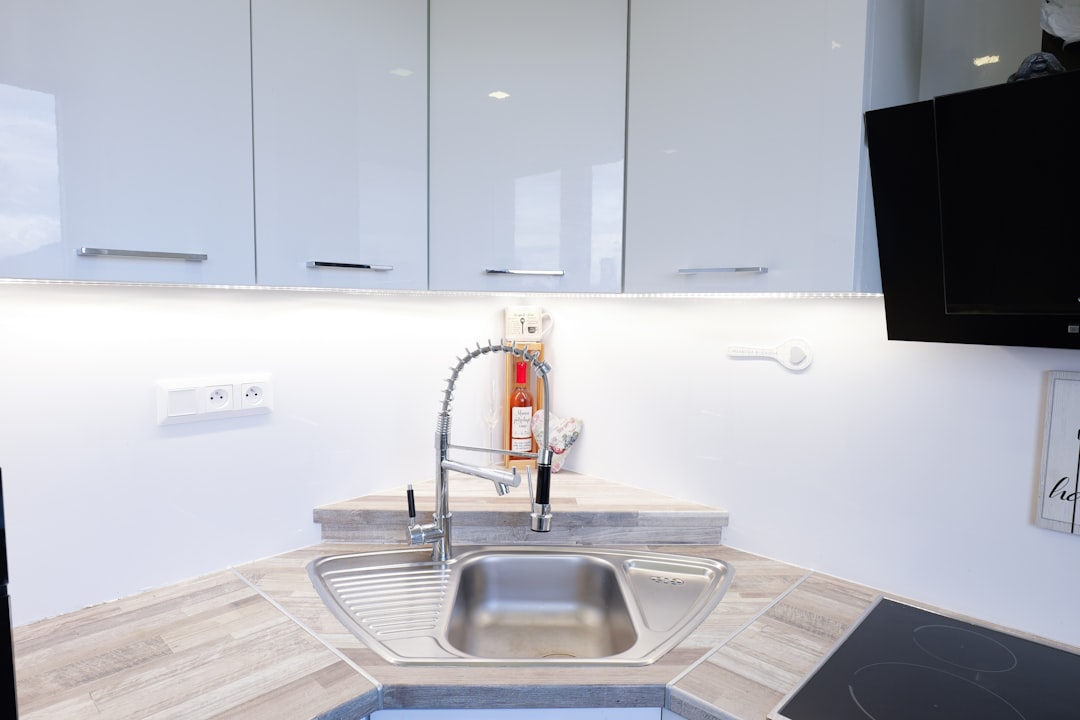
Your Tap Water Might Be the Problem: Here's the Fix

The best water filter for apartment living doesn't require drilling, plumbing changes, or your landlord's blessing. Here's a quick look at the top renter-friendly options:
| Filter Type | Best For | Installation | Avg. Cost |
|---|---|---|---|
| Under-sink (DIY) | High-volume filtering | Tool-free, removable | $150–$1000 |
| Countertop RO | PFAS, heavy metals | No install needed | $200–$800 |
| Faucet-mount | Basic chlorine/lead | Clips onto faucet | $25–$50 |
| Pitcher filter | Small spaces, budget | None | $30–$100 |
| Shower filter | Chlorine, skin/hair | Screws onto showerhead | $25–$45 |
Apartment renters face a water quality problem that homeowners often don't think about. Your water may leave the treatment plant clean, but it still has to travel through your building's shared pipes, aging risers, and old solder joints before it reaches your faucet.
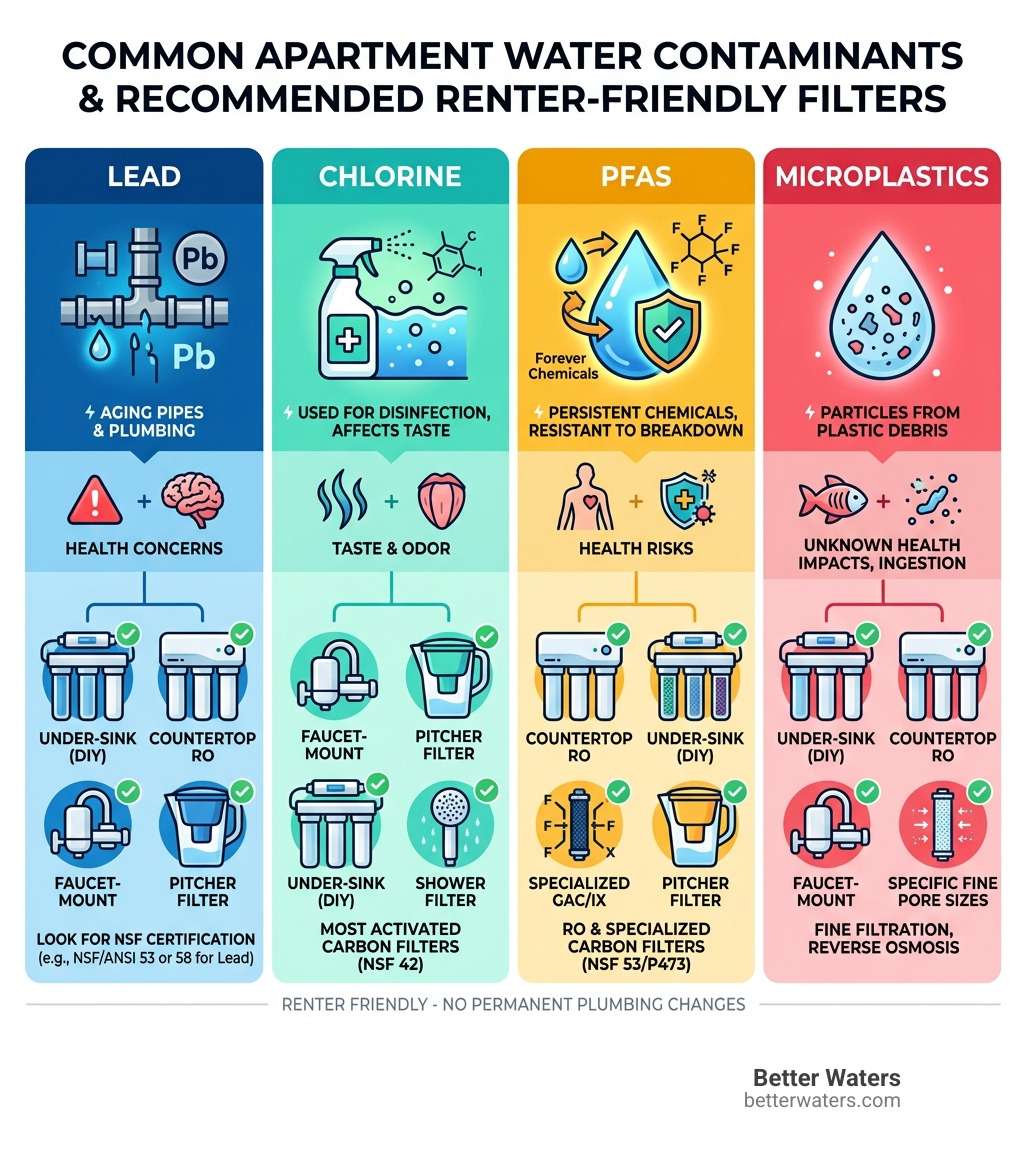
In buildings constructed before 1986, those pipes may contain lead. The Environmental Protection Agency (EPA) estimates that 15–22% of older U.S. water systems exceed the federal lead action level of 15 parts per billion. And a 2024 study found microplastics in 94% of U.S. tap water samples tested.
The frustrating part? You can't fix the pipes. You can't call a plumber and rewire the building. And most leases won't let you make permanent modifications, meaning the wrong filter choice could cost you your security deposit.
The good news: you don't need permanent installation to get clean water. The right filter gives you bottled-water quality straight from the tap, without a single hole drilled in your cabinet.
Why you need a water filter for apartment living in 2026
Living in New York City means living in a world of architectural marvels, but those beautiful pre-war buildings often come with a hidden secret: ancient plumbing. Even if you think the city's water supply is world-class at its origin, the "last mile" of piping, including the shared risers and branch lines within your specific apartment building, can introduce many more contaminants than were there when the water left the reservoir.
As we move through 2026, concerns about "forever chemicals" like PFAS and microplastics are at an all-time high. A 2024 study confirmed that microplastics are nearly ubiquitous in U.S. tap water. For an apartment dweller, you aren't just drinking your water; you're drinking the history of your building's pipes. Aging infrastructure often relies on lead solder, which can leach into your water, especially if it sits in the pipes overnight.
Furthermore, municipal providers use chlorine or chloramines to disinfect water. While necessary for safety, these chemicals leave a distinct "swimming pool" taste and smell. If you've ever noticed your morning coffee tastes a bit off, or your skin feels tight and itchy after a shower, you're experiencing the side effects of unfiltered city water. There are 6 Great Reasons to Filter Your Tap Water, ranging from improving the taste of your cooking to protecting your long-term health from heavy metals.
The Renter-Friendly Choice: Under-Sink Filtration Systems
When most people think of a water filter for apartment use, they picture a plastic pitcher taking up half the fridge or a bulky unit sitting on the counter. But for those who want a "set it and forget it" solution that doesn't clutter their living space, under-sink systems are the gold standard.
One concern for a renter is the security deposit. You cannot drill holes in the countertop for a dedicated filtered water faucet, and you certainly can't start cutting into the main plumbing lines. This is where modern, renter-friendly under-sink systems shine. They are designed for non-permanent installation, typically connecting directly to your existing cold-water line using simple braided hoses. When your lease is up, you simply disconnect the system, take it with you, and reconnect the original hose. No harm, no foul, and no lost deposit.
These systems offer a minimal footprint, tucked away behind your cleaning supplies, and provide a much higher filtration capacity than any pitcher or faucet-mount could ever dream of. When Choosing a Water Filter, renters should look for systems that offer high flow rates so they aren't waiting five minutes just to fill a pasta pot.
Benefits of a High-Capacity Under-Sink System for Apartment Kitchens
We believe that apartment living shouldn't mean compromising on performance. This is why we focus on high-capacity solutions like the XL7000 system. Unlike small filters that need replacing every month, the XL7000 boasts a massive 6000-gallon capacity. To put that in perspective, that's equivalent to over 45,000 standard bottles of water.
One of the biggest complaints with apartment filters is the "trickle effect", where the water pressure drops so low it becomes a nuisance. The XL7000 accommodates up to 2.5 GPM (gallons per minute), which likely far exceeds the full flow of your existing faucet. You get multi-stage filtration that targets chlorine, sediment, and heavy metals, without the wait. Comparing New York City Tap Water Unfiltered with NYC Tap Water Filtered Through the XL7000 shows a dramatic reduction in the impurities that commonly plague NYC high-rises. For a high-performance solution that won't affect your lease, you can buy the XL7000 Water Filtration System to ensure your water is safe and clean.
Maintaining your water filter for an apartment without permanent changes
Maintenance is critical to assure your filter performs as certified. In an apartment, you want a system that doesn't require outside labor or even a toolbox every time a filter needs changing.
Renter-friendly under-sink systems utilize "twist-and-lock" technology. Swapping a cartridge is as simple as changing a lightbulb, with no plumber required. Because these high-capacity cartridges last so long (often up to a full year depending on usage), the cost per gallon is significantly lower than buying filters for a pitcher every few weeks. This is especially true in high-TSS (Total Suspended Solids) areas where smaller filters might clog or exhaust their media in a short time. By choosing a robust system, you ensure consistent water quality from the day you move in until the day you hand back the keys.
Advanced Multi-Stage Filtration and the Power of Carbon
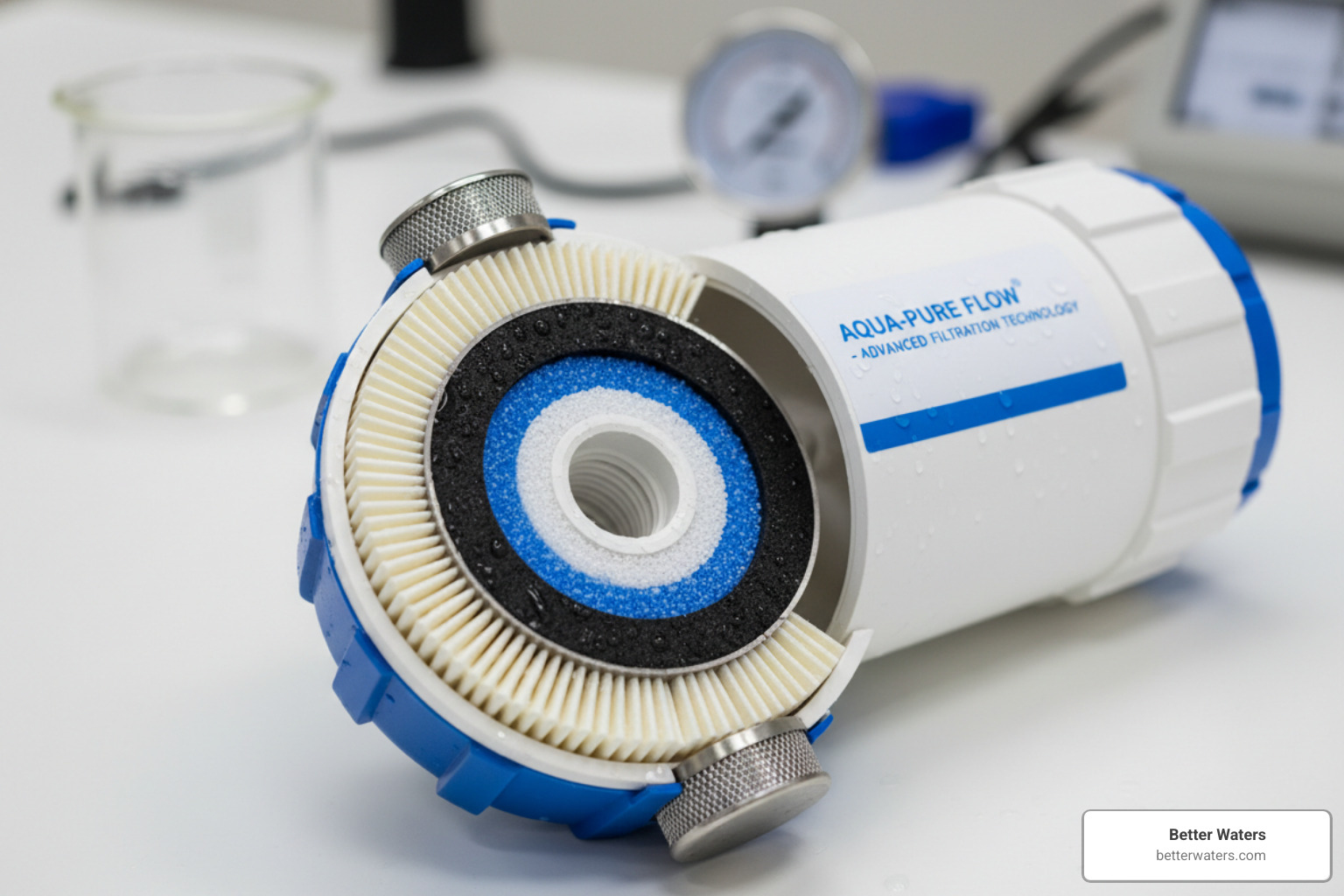
At the heart of any effective water filter for apartment use is carbon. But not all carbon is created equal. Modern systems, like the XL7000, utilize 3M-developed technology featuring a high-density carbon block.
Carbon works through a process called adsorption. Imagine the carbon block as a massive, microscopic sponge with millions of tiny pores. As water passes through, chemicals like chlorine, VOCs (volatile organic compounds), and pesticides "stick" to the carbon surfaces. This is the core component of modern filtration because it is incredibly effective at removing both the "chemical" taste of city water, and many other contaminants such as Trihalomethanes you can neither taste nor smell.
However, a single stage isn't enough for the complex cocktail of contaminants found in urban pipes. A true multi-stage system starts with a sediment wrap to catch the "big stuff", the particles that have precipitated out of solution as water travels between upstate reservoirs and NYC buildings. Then, the water moves through the carbon block for chemical removal. The result is a system that delivers superior water quality in a practical design. Why a Point-of-Use Water Filter Just Makes Sense for Your Home is simple: it treats the water in the final seconds before it hits your glass.
Key Certifications and Performance Standards to Verify
Don't just take a manufacturer's word for it. When shopping for a water filter for apartment use, look for NSF/ANSI certifications. These are the "gold standards" of the industry:
- NSF/ANSI 42: Covers "Aesthetic Effects." This means the filter is proven to remove chlorine and improve the taste and odor of your water.
- NSF/ANSI 53: Covers "Health Effects." This is the big one. It certifies that the filter can reduce specific contaminants like lead, mercury, and VOCs.
- NSF/ANSI 58: Specifically for Reverse Osmosis systems, certifying their ability to reduce TDS and other heavy metals.
- NSF/ANSI 401: A newer standard that tests for "emerging contaminants," including some pharmaceuticals and PFAS.
In an apartment, you also need to consider the "pure-to-drain" ratio if you are using a Reverse Osmosis (RO) system. Traditional RO systems can waste up to 4 gallons of water for every 1 gallon purified. For an NYC renter paying for water, or simply one who is environmentally conscious, looking for high-efficiency systems or high-capacity carbon systems (which waste zero water) is a smarter move.
Frequently Asked Questions about Apartment Water Filters
Do I need my landlord's permission to install an under-sink filter?
This is a common question we get. In most cases, if the system is non-permanent and requires no drilling, you do not need permission. Because a DIY under-sink system like the XL7000 connects to an existing supply line and can be removed in minutes without leaving a trace, it is generally considered a "removable appliance" similar to a countertop microwave. However, we always recommend checking your specific lease for clauses regarding "plumbing modifications" if any are noted.
How often should I replace my apartment water filter?
This depends entirely on the gallon capacity of your filter, the quality of your incoming water, and how much water you process. In Manhattan, where water is generally "soft" but can be high in sediment from old pipes, a standard pitcher filter might only last 2–4 weeks before the taste degrades. A high-capacity under-sink system is usually reliable for 6 to 12 months. Manufacturers generally advise you replace your filter every 6 months to prevent bacterial growth within the filter media. Since the XL7000 is certified to stop bacteria, we think you can safely go for up to 12 months, as long as you are not seeing a significant reduction in flow.
Can these filters remove PFAS and heavy metals?
Yes, but you must choose the right technology. Standard "gravity" pitchers are as a rule inadequate for heavy metals and PFAS reduction, because the water doesn't stay in contact with the filter media long enough. Multi-stage systems and Reverse Osmosis are the most effective. Look for a system with a solid carbon block or an RO membrane; these are specifically designed to trap the tiny molecules of "forever chemicals" and heavy metals like lead and copper.
Conclusion
Finding the right water filter for apartment living shouldn't be a headache, and it definitely shouldn't put your security deposit at risk. Whether you opt for a countertop unit or a high-performance under-sink system, the goal is the same: clean, safe, and delicious water.
The XL7000 from Better Waters offers a professional-grade solution that fits perfectly into the renter lifestyle. It provides bottled-quality water, supports sustainable living by eliminating plastic waste, and installs in minutes without a single permanent change to your kitchen. Ready to ditch the heavy plastic bottles and the chlorine taste? It's time to Upgrade to the XL7000 Water Filtration System and enjoy the best water NYC has to offer, right from your own tap.
Share:
Price Check: What You'll Pay for Professional Under-Sink Filter Installation
Why Your Office Needs a Better Water Filtration System Right Now